


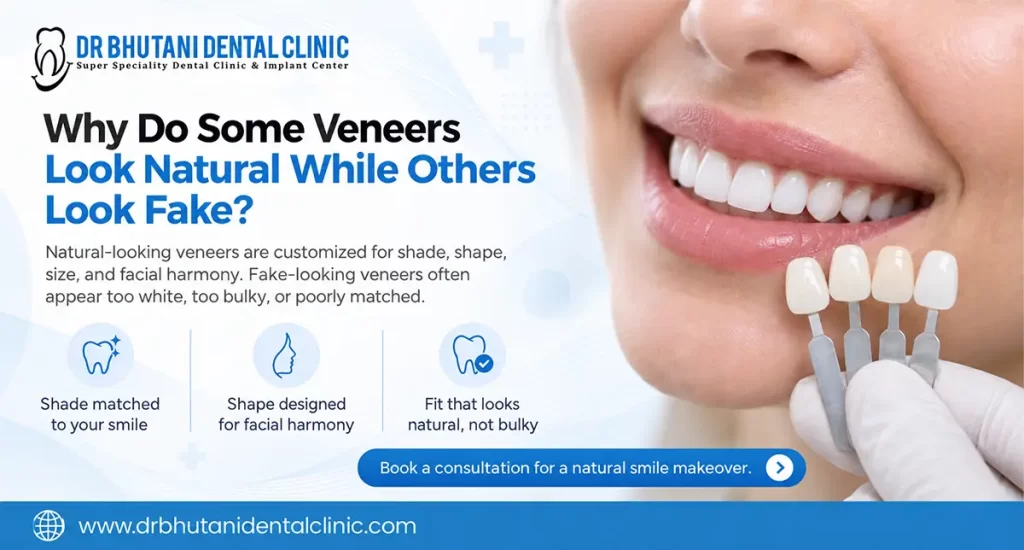
A beautiful smile is not simply about having very white teeth. The most appealing results usually come from teeth that look balanced, natural, and suited to the person’s face. This is one reason veneers have become a popular cosmetic dental treatment for improving tooth shape, colour, size, and overall smile appearance.
However, the final result can look very different from one person to another. The difference often comes down to treatment planning, tooth proportions, material selection, shade, translucency, and the skill of the dental team.
At Dr Bhutani Dental Clinic, cosmetic treatment is planned around the patient’s facial features, existing teeth, bite, and smile goals rather than using the same design for every smile.
What Makes Veneers Look Natural?
Natural-looking veneers should blend with the surrounding teeth and complement the patient’s facial appearance. They should not look like separate pieces placed over the teeth.
Several small details contribute to this effect. The shape of each tooth, its length and width, the shade, surface texture, and amount of translucency all matter. Even the way light reflects from the surface can influence how natural the final smile appears.
A good cosmetic dentist considers these details before deciding on the final design.
Tooth Shape and Proportion Matter
One of the biggest factors behind a natural smile is proportion. Teeth that are too long, too wide, or too uniform can make the smile appear artificial.
During dental veneers treatment, the dentist considers the relationship between the teeth, lips, gums, and facial structure. The goal is to create proportions that look harmonious when the patient smiles, speaks, and rests their face.
Not every tooth needs to have exactly the same shape. Small natural differences can actually make a smile appear more realistic.
The Right Shade Is More Than Just White
Many people associate a beautiful smile with extremely white teeth. However, natural teeth usually contain subtle variations in colour and translucency.
When planning veneers treatment, the dentist considers the patient’s complexion, age, existing teeth, and personal preferences while selecting a suitable shade. Excessively bright or completely opaque teeth may stand out instead of blending naturally with the face.
A well-planned shade should look attractive under different types of lighting rather than only under the dental clinic’s lights.
Translucency Creates a More Realistic Appearance
Natural teeth allow some light to pass through their outer layers. This creates depth and variation that can be difficult to reproduce with a completely opaque material.
Modern dental ceramics can be designed with different levels of translucency. The dentist and dental laboratory can use this property to create a more lifelike appearance.
This is particularly important for the front teeth because they are highly visible when you smile or speak.
Surface Texture Also Makes a Difference
Natural teeth are not perfectly smooth. They have very fine surface characteristics that affect the way light reflects from them.
If the surface of veneers is designed to look completely flat and uniform, the result may appear less natural. Carefully created texture and appropriate polishing can help replicate the appearance of natural enamel.
This is one of the details that may not be obvious to a patient during the initial consultation but can make a significant difference in the final smile.
Your Smile Should Match Your Face
A smile should be designed as part of the face rather than as an isolated feature. Facial shape, lip movement, gum display, and the way the teeth show while smiling can all influence the design.
For patients seeking the top cosmetic dentist for dental veneers in india, it is useful to ask how the proposed smile will be customised to their facial features.
A good consultation should involve understanding what you want to change while also considering what already works well with your natural appearance.
Why Digital Smile Planning Can Be Helpful
Digital photographs, scans, and other diagnostic tools can help dentists analyse the existing smile before beginning treatment. These tools can assist with evaluating tooth proportions, alignment, colour, and the expected changes.
Digital planning can also make communication easier. Patients can discuss their expectations with the dental team and understand the proposed treatment approach before proceeding.
Technology is useful, but it is the dentist’s clinical judgement and treatment planning that determine how appropriately it is used.
Material Selection Influences the Final Result
Different types of dental ceramics have different optical and physical characteristics. The appropriate material depends on factors such as the location of the teeth, desired appearance, tooth structure, bite, and individual treatment requirements.
During dental veneers treatment, your dentist can explain which material may be appropriate for your case and why. Choosing a material simply because it is popular may not produce the most suitable result for every patient.
A Skilled Dental Laboratory Is Also Important
Creating natural-looking veneers is a collaborative process. The dentist plans the treatment and prepares the teeth when required, while the dental laboratory plays an important role in creating the final restorations.
The laboratory technician works with information about the patient’s tooth shade, shape, photographs, impressions or digital scans, and treatment plan. Communication between the dentist and laboratory can therefore have a direct influence on the final appearance.
How to Choose the Right Dentist for Veneers
Before starting treatment, look at the dentist’s experience with cosmetic cases, previous smile transformations, treatment approach, and communication style. Before-and-after photographs can help you understand the type of work performed by the clinic.
During your consultation, ask questions about the material, expected appearance, preparation required, maintenance, longevity, and whether the proposed treatment is suitable for your teeth.
At Dr Bhutani Dental Clinic, patients can discuss their smile concerns and explore personalised cosmetic options based on their dental condition and aesthetic goals.
How to Maintain Your Veneers
Good oral hygiene remains important after treatment. Brush regularly with a suitable toothpaste, clean between your teeth, and attend routine dental examinations.
Avoid using your teeth to open packages or bite unnecessarily hard objects. Your dentist may also recommend specific care depending on the material and your individual bite.
With appropriate care and regular professional monitoring, cosmetic restorations can remain an important part of your smile for many years.
Frequently Asked Questions
Do veneers always look natural?
The appearance depends on factors such as tooth proportions, shade, translucency, material, surface texture, and treatment planning. A personalised design can help the restorations blend naturally with the smile.
How are veneers matched to natural teeth?
The dentist considers factors such as existing tooth colour, facial appearance, skin tone, translucency, tooth shape, and the patient’s aesthetic preferences before selecting a suitable shade and design.
Are veneers suitable for everyone?
Not necessarily. A dental examination is important to evaluate the condition of the teeth, gums, bite, and overall oral health before considering treatment.
How long does veneers treatment take?
Treatment time varies depending on the number of teeth being treated, the type of restoration, preparation requirements, laboratory work, and individual case complexity.
Can veneers improve the shape of teeth?
Yes. Depending on the case, they can help improve the appearance of teeth with concerns involving shape, size, colour, minor spacing, or certain cosmetic imperfections.
How do I find the right dentist for veneers?
Look for relevant cosmetic dentistry experience, personalised treatment planning, quality before-and-after cases, appropriate technology, and a dentist who clearly explains the treatment and expected outcome.