
If a parent is asked by a dentist what they want…
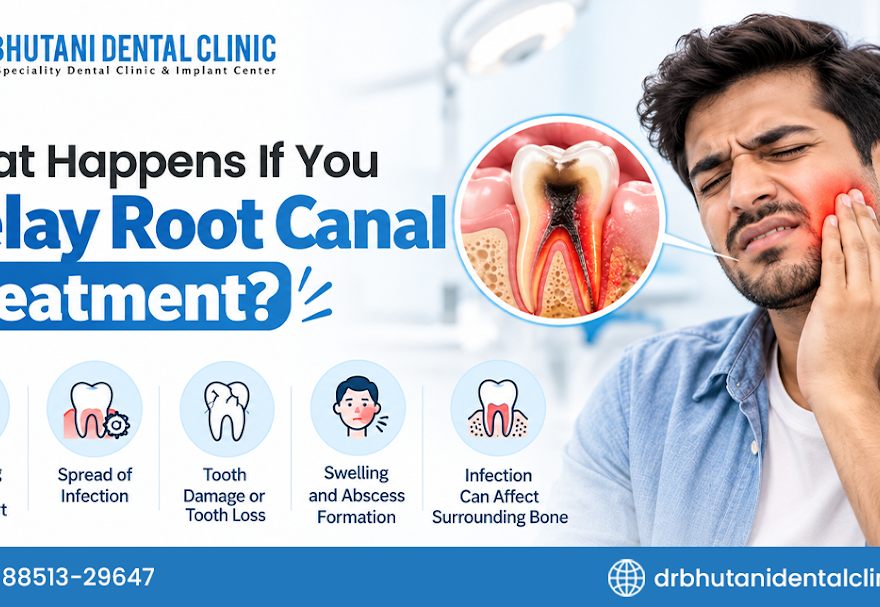
What Happens If You Delay Root Canal Treatment?
A tooth that is sensitive for a day and then settles is easy to just put to one side. We’re all busy and it’s perfectly natural to wait and see. The inside of a tooth however, cannot heal itself. That’s why we at Dr Bhutani Dental Clinic always encourage patients to get a root canal done as soon as the need is identified. This guide looks at what the root canal procedure is, what happens inside the tooth over time and how we at the clinic go about the treatment.
What Root Canal Treatment Actually Does
Every tooth has a pulp which is soft tissue containing the nerves and tiny blood vessels. If the bacteria get to the pulp via a deep cavity, a crack or an old filling then the pulp becomes inflamed. A root canal treatment (RCT) involves the removal of the infected pulp, cleaning and shaping of the narrow canals within the root and then sealing them. The tooth can then remain in the mouth and continue to function. The branch of dentistry which deals with this is endodontics and it’s a very common shorthand for the procedure to refer to it as RCT.
Understanding Dental Treatment Terminology
Dental terminology can turn a straightforward consultation into something quite complex so a few terms are worth knowing. Pulpitis is inflammation of the pulp. The apex is the tip of the root. Obturation is the process of filling and sealing the cleaned canals. Periapical refers to the area around the apex of the root and that’s what your dentist will be looking at on the X-ray. Once you know what these terms mean it’s much easier to ask questions and go ahead with your treatment.
How a Tooth Changes Over Time
At the very beginning a tooth may only be sensitive to hot and cold drinks. Over weeks or months the inflammation can develop and the nerve can become completely non-responsive. Many people interpret this as a good thing as the sensitivity goes away. The bacteria however can still be going on inside the tooth. Eventually the gum adjacent to the root may become inflamed or there may be a small bump and the bone around the root tip can be involved. The treatment at this stage may require more visits and the tooth is much more difficult to save. That’s the principal reason why it’s so important to get in at the first opportunity.
Why Early Care Is Kinder to Your Smile and Your Budget
If you get your root canal treatment early it’s normally a shorter, simpler procedure and the likelihood of being able to keep the natural tooth is greater. A natural tooth enables you to chew properly, keeps your adjacent teeth in place and helps to maintain the supporting bone in the jaw. It’s often the most sensible thing to do to save the original tooth as replacing it later with a bridge or an implant is a far bigger investment of time and money.
What to Expect During Treatment
The dentist starts off by administering local anaesthetic to the area and isolating the tooth. A small opening is made, the pulp is removed and the canals are cleaned and shaped before being filled and sealed. A lot of practices now use rotary root canal treatment (flexible, motorised instruments which are much more effective at shaping the canals than hand files alone). Digital X-rays and 3D scans are used to give the dentist a clear view of the canal anatomy. The tooth is then typically protected with a filling or a crown so it can cope with normal chewing.
Root Canal Treatment at Dr. Bhutani Dental Clinic
At the Rajouri Garden clinic endodontics is run by Dr. Pratima Bhutani (consultant endodontist and esthetic dental specialist) with a team of senior MDS’s. For appropriate cases they do single sitting root canals so patients with very busy schedules can often get their treatment done in fewer visits. They do have a CBCT full mouth scan for diagnosis. They follow international sterilisation protocols, are ISO and BLS certified and have in house lab support for restorations. The in clinic consultation is listed at Rs 1,000 and is valid for one week.
Simple Habits That Protect Your Teeth
Brushing twice a day with fluoride toothpaste, flossing every day and having a check up with your dentist every six months will all help to pick up on any little issues before they get to the pulp. If a tooth is sensitive for more than a couple of days or a filling feels different in any way then an early check will almost invariably be a very straightforward affair. Don’t use your teeth to open packets or to chew ice as that can lead to small cracks which then provide a route for bacteria to get in.
Final Thoughts
Caring for a tooth early is one of the simplest ways to protect your smile for the long term. Timely root canal treatment lets you keep your natural tooth, stay comfortable while eating, and avoid larger procedures later. Choosing the right dentist matters just as much. Many patients like to review an endodontist resume before booking, and it is a sensible habit, because qualifications and training show how a specialist approaches your care. At Dr. Bhutani Dental Clinic, the team page lists the qualifications of each specialist, including Dr. Pratima Bhutani, a consultant endodontist.
Frequently Asked Questions
How comfortable is the procedure?
With modern anaesthetic the patient generally describes it as being much like having a filling. The tooth remains numb throughout and any mild tenderness afterwards will normally settle down in a few days with the medication your dentist recommends.
How do I know that I may need a root canal?
Lingering sensitivity to heat or cold, discomfort when you bite, a darkened tooth or swelling of the gum are all common reasons to get checked. An examination and X-ray will tell you whether or not treatment is required.
How long does it take?
Lots are done in one or two visits. The more complex the canals or the teeth that need more time to heal will obviously require more.
Does a tooth that’s had a treatment require a crown?
Back teeth particularly benefit from having a crown as they’re subjected to the force of chewing. Your dentist will of course give you their advice as to whether or not a crown is necessary depending on the amount of natural tooth that’s left.
How long will a treated tooth last?
With good hygiene and regular checkups many of the treated teeth will last for years and in fact for life.

Related Posts


 FSC India.
