
In the world of pediatric dentistry, Dr. Bhutani stands out as…
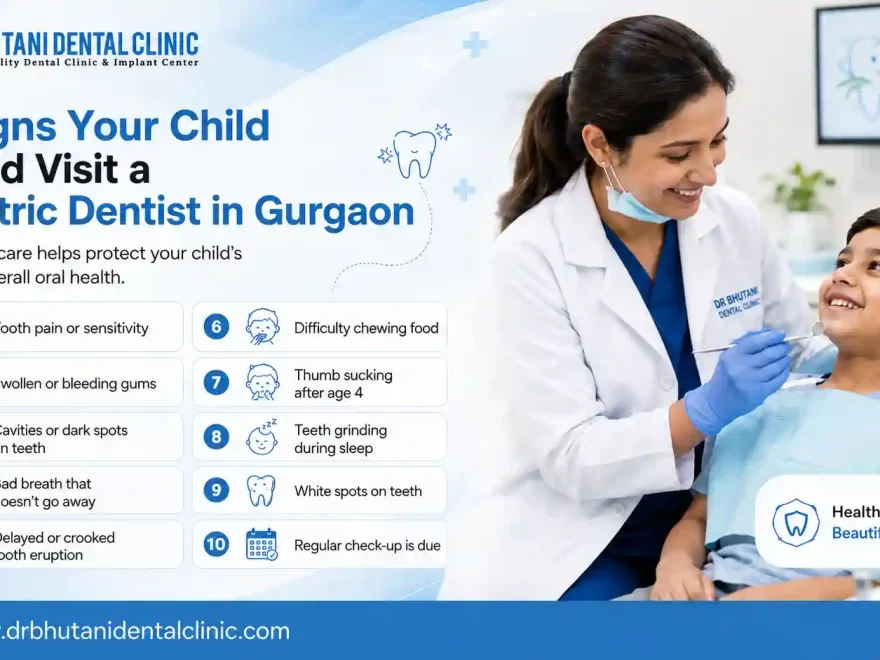
10 Signs Your Child Should Visit a Pediatric Dentist in Gurgaon
Children’s teeth need regular attention because their oral health can influence eating, speaking, confidence, and the development of permanent teeth. While regular dental check-ups are important, certain changes in your child’s teeth, gums, or habits may indicate that a dental visit is needed sooner. A pediatric dentist in Gurgaon can assess these concerns and guide parents about suitable treatment and daily oral care.
At Dr Bhutani Dental Clinic, we focus on making dental care comfortable and easy for children while helping parents understand their child’s changing dental needs. Here are 10 signs that it may be time to schedule a dental appointment.
1. Toothache or Frequent Tooth Sensitivity
If your child regularly complains of tooth pain or sensitivity while eating hot, cold, sweet, or hard foods, it should not be ignored. Tooth decay, enamel problems, or other dental concerns can cause discomfort. A timely examination can identify the reason and prevent the problem from becoming more complicated.
2. Visible Spots or Changes in Tooth Colour
White, brown, or dark spots on your child’s teeth can sometimes indicate changes in the enamel or early tooth decay. Parents may notice these changes while brushing their child’s teeth. Visiting a pediatric dentist in Gurgaon can help determine the cause and whether preventive care or treatment is required.
3. Bleeding or Swollen Gums
Healthy gums generally should not bleed during routine brushing. If your child frequently experiences bleeding, redness, swelling, or tenderness around the gums, a dental examination can help identify the cause. Improving brushing habits and receiving professional guidance can support healthier gums.
4. Difficulty Chewing Food
Children may sometimes avoid certain foods because chewing feels uncomfortable. If your child consistently prefers soft foods, chews only on one side, or complains while eating, the teeth and bite should be examined. Dental problems can sometimes affect how comfortably a child eats.
5. Crowded or Overlapping Teeth
As children grow, their jaws and teeth continue to develop. In some children, permanent teeth may appear crowded, overlap with other teeth, or have limited space. Early evaluation by a pediatric dentist in Gurgaon can help monitor dental development and determine whether an orthodontic assessment may be useful.
6. Difficulty Speaking Certain Sounds
Teeth and the position of the tongue play a role in speech development. If your child has persistent difficulty producing certain sounds, particularly when combined with unusual tooth positioning or oral habits, discussing the concern with a dentist can be helpful. The dentist can assess oral development and recommend further evaluation when appropriate.
7. Thumb Sucking or Other Oral Habits
Thumb sucking, prolonged pacifier use, tongue thrusting, or other oral habits can affect the position of developing teeth and the shape of the bite when they continue for an extended period. A dental visit can help parents understand whether the habit is affecting oral development and how to gradually manage it in an age-appropriate way.
8. A Loose or Damaged Tooth After an Injury
Children are naturally active, so falls and sports-related injuries can sometimes affect their teeth. Even when a tooth looks fine after an impact, a dental examination may be recommended because damage may not always be immediately visible. A dentist can check the tooth and surrounding tissues and advise parents about appropriate follow-up.
9. Early or Delayed Loss of Baby Teeth
Baby teeth have an important role in guiding permanent teeth into position. If a baby tooth falls out much earlier than expected or remains in place while the permanent tooth is appearing, professional evaluation can help monitor the development of the child’s dentition. In some cases, appropriate intervention can help maintain space for permanent teeth.
10. Your Child Has Never Had a Dental Check-Up
A child does not need to wait for pain before visiting a dentist. Regular dental visits allow the dentist to monitor tooth development, identify early changes, provide preventive care, and teach children effective brushing habits.
The American Academy of Pediatric Dentistry recommends that children establish a dental home by their first birthday. Starting early can also help children become familiar with the dental environment.
Why Choose a Pediatric Dentist for Your Child?
Children have different dental needs at different stages of growth. A pediatric dentist in Gurgaon understands these developmental changes and can provide age-appropriate guidance. Dental visits can include checking for cavities, monitoring tooth eruption, assessing oral habits, discussing fluoride use, and guiding parents about brushing and diet.
At Dr Bhutani Dental Clinic, our approach focuses on creating a comfortable experience while providing personalised dental care based on the child’s age, dental development, and individual needs.
How Parents Can Support Better Oral Health at Home
Good dental care starts at home. Help your child brush twice a day with fluoride toothpaste appropriate for their age. Encourage regular water intake and limit frequent sugary snacks and drinks. Parents should also supervise brushing in younger children to ensure that all tooth surfaces are cleaned properly.
Regular dental examinations complement these daily habits and allow potential concerns to be addressed at an appropriate stage.
When Should Your Child Visit a Pediatric Dentist?
If you notice tooth pain, unusual spots, gum changes, difficulty chewing, dental injuries, or changes in the way your child’s teeth are developing, scheduling a dental examination is a sensible step. Even without visible concerns, regular check-ups can support healthy oral development.
Dr Bhutani Dental Clinic provides child-focused dental care in Gurgaon, helping children develop healthy dental habits from an early age.
Frequently Asked Questions
At what age should a child first visit a dentist?
The first dental visit is generally recommended by the child’s first birthday or within six months of the first tooth appearing. Early visits help parents understand preventive dental care and allow the dentist to monitor development.
How often should children visit a dentist?
Many children benefit from dental check-ups approximately every six months, although the appropriate frequency depends on their oral health and individual needs.
Can baby teeth get cavities?
Yes. Baby teeth can develop cavities and should be cared for properly. Untreated decay can cause pain and may affect eating and the health of developing permanent teeth.
Are dental X-rays safe for children?
When X-rays are clinically necessary, dental professionals use appropriate techniques and protection while keeping exposure as low as reasonably achievable. The dentist will recommend an X-ray only when its diagnostic benefit is appropriate.
How can I make my child comfortable during a dental visit?
Use simple and positive language when discussing the dentist. Avoid using frightening words or sharing stressful dental experiences. Choosing a child-friendly dental environment can also make visits easier.
Can a pediatric dentist identify future orthodontic problems?
A pediatric dentist can monitor tooth eruption, spacing, jaw development, and oral habits. If an orthodontic concern becomes apparent, the child can be referred for a detailed orthodontic evaluation at the appropriate stage.

Related Posts

 FSC India.