
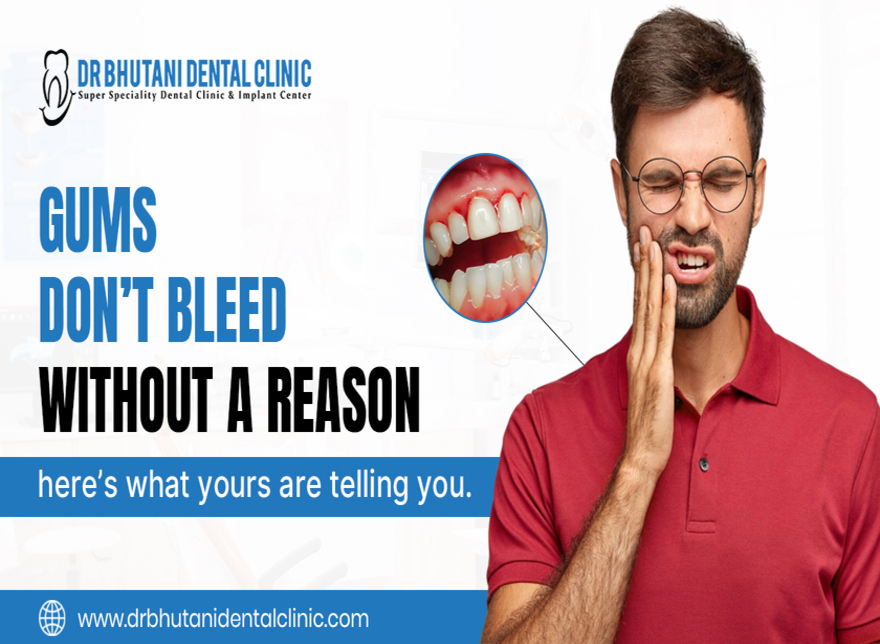
Gums Don’t Bleed Without a Reason: Causes, Signs, and Lasting Treatment for Healthy Gums
Have you ever noticed a pink tinge of blood when you brush or floss your teeth? Maybe you’ve tasted blood after eating something crunchy or spat out red while rinsing your mouth. It’s easy to dismiss this as normal—something that just happens when you brush too hard. But here’s the truth your body is trying to tell you: gums don’t bleed without a reason.
We believe that healthy gums are the foundation of a healthy smile. Bleeding gums are not a routine part of oral hygiene. They are a warning sign, a red flag that something is wrong inside your mouth. Ignoring it today can lead to much more serious dental problems tomorrow, including tooth loss and even impacts on your overall health.
If you’re experiencing gums bleeding, consulting the best dental clinic in Delhi can help you identify the real cause and get the right, lasting treatment to restore your oral health.
In this blog, we’ll explore why gums bleed, what your body is trying to communicate, and the most effective, lasting treatment options for a lifetime of healthy smiles.
The Myth: Is Bleeding While Brushing Normal?
One of the most common myths in oral health is that it’s normal for gums to bleed during brushing or flossing. Answer is a definitive ‘NO’. Healthy gums are firm, pale pink, and fit snugly around your teeth. They should not bleed when you touch them.
Think of bleeding gums like a cut on your hand that won’t stop bleeding. You wouldn’t ignore that; you’d want to know why. Similarly, oral bleeding is a sign of inflammation or injury. When you see blood, your mouth is sending a distress signal.
What Your Gums Are Trying to Tell You: Major Causes of Gums Bleeding
Bleeding gums are most often a symptom of an underlying issue. Our expert dentists regularly see these common causes:
1. Gum Infection (Gingivitis)
This is the number one cause of bleeding gums. Gingivitis is the earliest stage of gum disease. It occurs when plaque—a sticky film of bacteria—builds up on your teeth and along the gum line. If not removed by brushing and flossing, the bacteria irritate the gums, causing them to become inflamed, tender, and prone to bleeding.
2. Advanced Gum Disease (Periodontitis)
If gingivitis is left untreated, it can progress to periodontitis. This is a more severe infection where the inner layer of the gum and bone pull away from the teeth, forming pockets that collect debris and bacteria. At this stage, gums bleed more frequently, and the condition can lead to bone destruction and eventually tooth loss.
3. Plaque and Tartar Buildup
Plaque is a soft, sticky film, but when it hardens into tartar (calculus), it becomes a rough, porous deposit that further irritates the gums. This buildup makes gums more susceptible to bleeding and infection and can only be removed by a dental professional during a routine cleaning at a dental clinic in Delhi like ours.
4. Improper or Poor Oral Hygiene
This works both ways. Not brushing or flossing enough allows bacteria to flourish, leading to bleeding. However, brushing too hard or using a toothbrush with hard bristles can also traumatize the gums, causing them to recede and bleed.
5. Early Signs of Gum Disease
Bleeding is often the very first noticeable sign that your gums are unhealthy. It’s the earliest warning that you are on the path to more serious problems. Catching it at this stage means the damage is often reversible with the help of a skilled dentist.
6. Medical and Lifestyle Factors
- Medications: Blood thinners (anticoagulants) can make gums bleed more easily. Some other medications can cause dry mouth, increasing the risk of gum irritation.
- Hormonal Changes: Pregnancy, puberty, and menopause can make gums more sensitive and prone to bleeding.
- Smoking and Tobacco Use: While smoking restricts blood flow and can mask bleeding, it is a major cause of gum disease. Smokers may not bleed as much, but their gums are severely damaged beneath the surface.
- Systemic Health Conditions: Diseases like diabetes, leukemia, and clotting disorders can affect gum health and lead to bleeding. In fact, bleeding gums can sometimes be an early indicator of these underlying health issues.
- Nutritional Deficiencies: A lack of vitamins, particularly Vitamin C and Vitamin K, can weaken gum tissue and contribute to bleeding.
How to Know If Your Gums Are at Risk
Beyond visible blood, there are other signs that indicate your gums are in trouble. If you notice any of the following along with bleeding, it’s time to see a dentist. Red or Purple Gums: Healthy gums are pink. Deep red or purplish gums are a sign of inflammation.
- Swollen or Puffy Gums: This indicates fluid and inflammation in the gum tissue.
- Tender Gums: Pain or soreness when you touch your gums.
- Receding Gums: Teeth that look longer because the gum line is pulling away.
- Bad Breath (Halitosis): Persistent bad breath or a bad taste in your mouth that won’t go away.
- Loose Teeth or Changing Bite: As the supporting bone is destroyed, teeth may become loose or your bite may feel different.
- Pus Between Teeth and Gums: A sign of an active infection.
If you are experiencing gums bleeding along with any of these symptoms, a professional evaluation is crucial.
Lasting Treatment for Healthy Gums at Dr Bhutani Dental Clinic
Treating bleeding gums is not complicated once you address the root cause. The primary goal is to eliminate the bacterial infection and inflammation. At Dr Bhutani Dental Clinic, we focus on providing lasting treatment that not only solves the immediate problem but also prevents it from recurring.
1. Professional Dental Cleaning (Scaling and Root Planing)
In many cases, bleeding gums are caused by hard deposits of tartar that cannot be removed by brushing alone. Our dental hygienists perform a thorough professional cleaning, often called scaling, to remove this buildup safely and effectively.
For more advanced gum disease, we recommend a deeper cleaning called “scaling and root planing.” This procedure cleans below the gum line and smooths the tooth roots, helping the gums reattach to the teeth and eliminating the pockets where bacteria thrive. This is a cornerstone of lasting treatment for gum disease treatment
2. Treat Gum Disease and Cavities
If bleeding is caused by gingivitis or periodontitis, timely professional treatment is essential. Ignoring it will only worsen the condition, leading to bone loss and tooth mobility. A visit to the best dental clinic in Delhi like ours can provide you with advanced gum disease treatments, including laser therapy if needed, ensuring a long-term solution.
3. Personalized Oral Hygiene Guidance
Lasting results require partnership. Our dentists will work with you to improve your oral hygiene routine. We provide personalized guidance on:
- Brushing Correctly: Using a soft-bristled toothbrush and brushing gently in circular motions for two minutes, twice a day.
- Flossing Daily: We’ll show you the proper technique to remove plaque and food particles from between teeth.
- Antibacterial Mouthwash: We may recommend a specific mouthwash to help reduce plaque and control bacteria.
4. Review Your Medications and Health
If your bleeding is sudden and severe, we will consult with you to understand your full medical history and may recommend a consultation with your physician to rule out medication side effects or other health conditions.
5. Adopt a Healthy Lifestyle
We also counsel our patients on lifestyle changes that support lasting gum health:
- Quit Smoking: This is one of the best things you can do for your gum health.
- Eat a Balanced Diet: Ensure you’re getting enough Vitamin C and K.
- Manage Stress: Stress can weaken your immune system, making it harder for your body to fight off gum infections.
Long-Term Prevention of Gum Problems
To keep your gums healthy and prevent bleeding in the long run, Dr Bhutani Dental Clinic recommends:
- Follow a consistent oral hygiene routine: Brush, floss, and rinse as advised by your dentist.
- Visit your dentist every six months: Regular check-ups and cleanings are the cornerstone of preventive care and ensure any issues are caught early.
- Replace your toothbrush every 3-4 months.
- Stay hydrated: Water helps wash away food particles and bacteria.
These habits, combined with professional care from the best dental clinic in Delhi, can help you maintain strong, healthy gums and a confident smile for years to come.
Why Choose Dr Bhutani Dental Clinic for Lasting Gum Treatment?
Bleeding gums are often linked to deeper oral health problems that require expert care. Ignoring the warning sign today can lead to complex and costly treatments tomorrow. At Dr Bhutani Dental Clinic, we offer:
- Experienced dentists and gum specialists (periodontists)
- Advanced diagnostic technology to assess gum health
- Personalized, lasting treatment plans for gum disease
- A gentle, caring approach to dental anxiety
- Comprehensive dental care under one roof
With expert guidance, you can stop your gums from bleeding and protect your teeth for a lifetime.
Conclusion
Bleeding gums are your body’s alarm system. They are not normal and they are not something you should simply accept. By listening to this warning and taking action, you can prevent the progression of gum disease and protect not just your smile, but your overall well-being.
If you are struggling with gums bleeding, whether occasionally or frequently, consulting Dr Bhutani Dental Clinic is the best step toward a permanent solution. With expert diagnosis and advanced, lasting treatment, you can eliminate the infection, restore your gum health, and regain your confidence with a fresh, healthy smile.

 FSC India.