Our Doctors are Affiliated with:
Treatment Procedures
|
Bad breath (halitosis) can be caused by many things. It may be the result of odour-causing foods, tooth decay, periodontal (gum) disease, continued mouth dryness, use of tobacco products, sinus or respiratory infections, some medical disorders, inadequate oral hygiene or some medications. Your dentist can help identify the cause and, if it is due to an oral condition, can develop a treatment plan to eliminate this common source of embarrassment. What Causes Bad Breath? What you eat it affects the air you exhale. Certain foods, such as garlic and onions, contribute to objectionable breath odour. Once the food is absorbed into the bloodstream, it is transferred to the lungs, where it is expelled. Brushing, flossing and mouthwash will only mask the odour temporarily. Odours continue until the body eliminates the food. Dieters may develop unpleasant breath from infrequent eating. If you don't brush and floss daily, particles of food remain in the mouth, collecting bacteria, which can cause bad breath. Food that collects between the teeth, on the tongue and around the gums can rot, leaving an unpleasant odour. Dentures that are not cleaned properly can also harbor odour-causing bacteria and food particles. Bad breath is also caused by dry mouth (xerostomia), which occurs when the flow of saliva decreases as saliva is necessary to cleanse the mouth and remove particles that may cause odour. Tobacco products also cause bad breath, stain teeth, reduce one's ability to taste foods and irritate gum tissues. Caring for Your Smile Eliminating periodontal disease and maintaining good oral health is essential to reducing bad breath. Brush twice a day with a fluoride toothpaste to remove food debris and plaque. Brush your tongue, too. Once a day, use floss or an interdental cleaner to clean between teeth. If you wear removable dentures, take them out at night. Clean them thoroughly before replacing them the next morning. Mouthwashes are generally cosmetic and do not have a long-lasting effect on bad breath. A fluoride mouthrinse, used along with brushing and flossing, can help prevent tooth decay. A Common Misconception A lot of people have bad breath that remains for a long time. The medical term for this condition is chronic halitosis. And oddly enough, many people with chronic halitosis are not even aware of their problem breath. How is that possible? Because our sense of smell has an incredible ability to adjust to odours. Have you ever noticed how an offending smell in a closed room seems to lessen over time? Believe it or not, the room's odour does not improve, your nose merely gets used to it. That is why many people with chronic halitosis falsely believe their breath is perfectly fresh and normal. |
Children have two sets of teeth, milk teeth and permanent teeth. Both sets are important for children's speech, chewing, and for appearance. Additionally, milk teeth help in the proper development of muscles for chewing, and they also maintain the space so that permanent teeth can erupt in their correct positions. The first tooth appears in your child's mouth at the age of 6 months. Parents are required to begin brushing these teeth to prevent them from decaying. All the milk teeth erupt in the mouth by the age of 2 years. There are 20 milk teeth. Parents must brush their child's teeth, as the child will be unable to do so. The child can gradually be taught to brush his/her own teeth as soon as they have learnt to spit out the toothpaste. These teeth are shed between the age of 7 and 12 years, and are replaced by permanent teeth. But we have 32 permanent teeth, and the additional 12 permanent teeth erupt behind the milk teeth. The first one of these erupts at the age of 6 years, and is called the first permanent molar. This is a very important tooth.
All permanent teeth erupt by the age of 14 years, except the wisdom teeth, which usually erupts between the age of 17 and 25 years. So, between the age of 6 and 12 years, a child has both milk and permanent teeth. This is called the mixed dentition stage. Parents of these children often mistakenly think that the teeth, though decayed, do not require treatment and will fall off, as they will be replaced with new teeth. Teething Problems Many parents think that the fever and diarrohea, children get while the teeth are erupting is because of the eruption. This is only a coincidence. At that age, children are very active and tend to put everything into their mouth. This causes infection around the erupting teeth and upsets the stomach. Double Teeth Usually the permanent teeth are located just below their milk predecessors. With pressure from the permanent tooth, the root of the milk tooth gets dissolved / eaten away, and the milk tooth then falls to make way for the permanent tooth. But if the permanent tooth is placed too far away, it will erupt even without the predecessor falling, as there is no obstruction, and then we see double teeth, a new tooth behind or by the side of the old one. Such a situation should not be allowed to remain for long, say more than a couple of weeks. Timely removal of the milk tooth in such a case will allow the permanent tooth to take its rightful place. Correcting the Alignment
The age for correction of alignment differs from case to case, but in general, it is best done after the child has completed 12 years and all the permanent teeth have erupted. Many times early commencement of treatment gives better results, but treatment is possible at an older age also. The right person to consult is an orthodontist. |
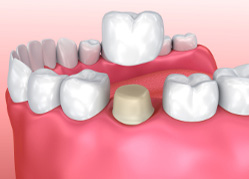
When teeth are heavily decayed they may be too weak to survive with just a filling. By placing a crown, a tooth may be given a new lease of life. Even when a single tooth is lost a denture may not be required as a bridge can be made which spans the gap with a tooth attached to those next to the space. Sometimes when a single small tooth is lost at the front of the mouth a simple bridge can be made which has 'wings' that are glued to the back of the adjacent teeth. This results in less tooth being damaged by the drill. When a tooth is heavily decayed it is more likely to fracture and lose considerable tooth substance. The greater risk is that a fracture line may go below the margin of the gum which makes restoration more difficult or near impossible. Crowns may be made from several different materials, gold and porcelain being the most common types. Gold is usually used on the back teeth, as it has several advantages over porcelain teeth. - Gold is strong in thin section and less tooth needs to be drilled away before taking the impression and fitting the crown. - The lab technician finds it easier to use gold as it shrinks less when cast and is easier to polish. Crowns of porcelain shrink when cast and the technician has to estimate this when making the crown. Porcelain is usually always used for the front teeth but may be used for the back teeth. This material can be made to appear very natural though several factors affect this and are outlined below Some porcelain crowns have metal inside which gives strength and support to the porcelain. This acts as a barrier for light and gives the crown a dull colour. On posterior teeth this won't be noticed but in the front of the mouth it can occasionally be a problem as the tooth looks duller than the natural teeth. Bridges
A bridge allows the dentist to replace lost teeth without the use of a denture or dental implant. Basically a false tooth is held in place by being attached to a tooth next door. The disadvantage is that the teeth next to the space have to be prepared in a similiar way to a crown in order to accept the bridge. If these teeth already have crowns or big restorations then this is not a problem, the major concern however is when these teeth have small or no restorations (fillings). One compromise is the 'acid etched bridge', with this type a fine ledge is placed on the back of the adjacent teeth One disadvantage of a bridge is that the patient should wait three months before placement as the 'gum' shrinks' after a tooth is extracted. If the bridge was fitted early a gap would appear underneath the pontic (the false tooth). At the back of the mouth this may not be a problem, at the front of the mouth however this may appear as a black line along the gum. Post Crowns
When the top of a tooth is lost due to decay there may be very little for the crown to actually hold onto. To gain 'retention' as dentists call it, a post is placed inside the tooth which forms a peg on top of the tooth and acts as a seat for the crown. Post crowns have a shorter lifespan than normal crowns as the roots may be brittle and weaker. Usually a post crown is a better option than having the tooth extracted with a subsequent denture or bridge. Maryland Bridges Normally a bridge requires the adjacent teeth to be prepared to accept the abutments of the bridge. This is destructive to these teeth especially if they have small or no fillings in them. A more conservative approach is a 'Maryland bridge' which uses wings that attach to the adjacent teeth. The disadvantage of these systems is that the life expectancy of the bridge is only 4-5 years when compared to the conventional type of 8 years. How its Done As a lot of tooth tissue may need to be removed your dentist will normally give you a local anaesthetic (injection) before starting treatment.
This tooth is heavily decayed and needs a crown to prevent the top part of the tooth beaking down completely. The decay is removed and any holes are filled with amalgam or a white filling material.
The tooth is then prepared using the drill. A ledge is made around the tooth and the top is cut down to make space for the gold. After this the dentist will take an impression of the tooth which is then sent to the laboratory. A model of the tooth is made from this and a crown made to fit.
The crown is then fitted. A special cement is used to bond it to the underlying tooth. The dentist may need to adjust it before the patient leaves the surgery so that the bite is just right.
This diagram shows what a tooth looks like after it has been prepared. The notches cut in the side help the crown stay on when its fitted. These are called retention grooves. |
|
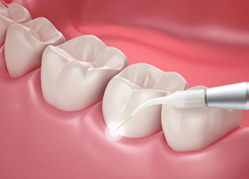
Laser dentistry can be a precise and effective way to perform many dental procedures. The potential for laser dentistry to improve dental procedures rests in the dentist’s ability to control power output and the duration of exposure on the tissue (whether gum or tooth structure), allowing for treatment of a highly specific area of focus without damaging surrounding tissues.
It is estimated that 6 percent of general dentists own a laser for soft-tissue applications, with that number expected to increase over time. Laser dentistry is a new technique that can improve the precision of your treatment while minimizing pain and recovery time. Benefits of Laser Dentistry? Here are some of the major benefits associated with laser dentistry:
Hard Tissue (Tooth) Laser Dentistry Procedures
Soft Tissue (Gum) Laser Dentistry Procedures
Other Laser Dentistry Applications
|
|
How is Tooth Bonding Accomplished? A very mild etching solution is applied to your teeth to create very small crevices in the tooth's enamel structure. These small crevices provide a slightly rough surface permitting a durable resin to bond materials to your teeth. The resin is then placed on your tooth and high-intensity light cures the resins onto your tooth's surface - with each individual layer of resin hardening in just minutes. When the last coat has been applied to your tooth, the bonded material is then sculpted to fit your tooth and finely polished. The resin comes in many shades so that we can match it to your natural teeth. Due to the layers involved, this procedure will take slightly longer than traditional silver fillings because multiple layers of the bonding material are applied. Typically bonding takes an hour to two hours depending on your particular case. Types of Tooth Bonding Procedures There are two types of bonding. What type is indicated in your situation depends upon whether you have a small area or a larger area that requires correction. For small corrections These are one appointment fillings which are color-matched to the tooth and are bonded to the surface for added strength. These are most appropriate for small fillings and front fillings as they may not be as durable for large fillings. For larger corrections Dental lab-created tooth-colored fillings require two appointments and involve making a mold of your teeth and placing a temporary filling. A dental laboratory then creates a very durable filling to custom-fit the mold made from your teeth. These fillings are typically made of porcelain. The custom-fit filling is then bonded to your tooth on your return visit. This type is even more natural looking, more durable and more stain resistant. Who is a candidate for tooth bonding? If you have close, small gaps between your front teeth, or if you have chipped or cracked teeth, you may be a candidate for bonding. Bonding is also used for patients who have discolored teeth, uneven teeth, gum recession or tooth decay. Bonding material is porous, so smokers will find that their bonding will yellow. If you think you are a candidate for bonding, discuss it with your dentist. Advantages & Disadvantages of Tooth Bonding
|
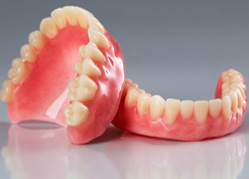
Dentures (also known as dental plates), can be defined as a set of artificial teeth, which are used when a patient has lost real teeth on the mandibular arch, the maxillary arch, or both. Patients can become entirely edentulous (without teeth) due to severe malnutrition, genetic defects such as Dentinogenesis imperfecta, ineffective oral hygiene or trauma. If you’ve lost all of your natural teeth, whether from periodontal disease, tooth decay or injury, complete dentures can replace your missing teeth and your smile. Replacing missing teeth will benefit your appearance and your health. Without support from the denture, facial muscles sag, making a person look older. You’ll be able to eat and speak—things that people often take for granted until their natural teeth are lost. TYPES OF DENTURES
|
|
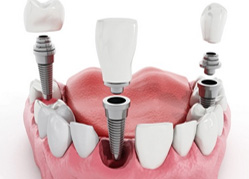
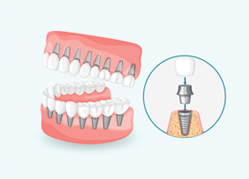
A dental implant is an artificial tooth root replacement and is used in prosthetic dentistry to support restorations that resemble a tooth or group of teeth. There are several types of dental implants. Surgical procedure
ConsiderationsFor dental implant procedure to work, there must be enough bone in the jaw, and the bone has to be strong enough to hold and support the implant. If there is not enough bone, more may need to be added with a bone graft procedure discussed earlier. Sometimes, this procedure is called bone augmentation. In addition, natural teeth and supporting tissues near where the implant will be placed must be in good health. Success rates
Dental implant success is related to operator skill, quality and quantity of the bone available at the site, and also to the patient's oral hygiene. The general consensus of opinion is that implants carry a success rate of around 95%. |
|
Bruxism is the medical term for grinding, gnashing or clenching your teeth. This condition affects both kids and adults. Some people with bruxism unconsciously clench their teeth together during the day, often when they feel anxious or tense. Most kids who have bruxism — and some adults with the condition — grind or gnash their teeth during sleep, usually in the early part of the night. This is called sleep bruxism. In most cases, bruxism is mild and may not even require treatment. However, it can be frequent and violent and can lead to jaw disorders, headaches, damaged teeth and other problems. Unfortunately, people with sleep bruxism usually aren't aware of the habit, so they aren't diagnosed with the condition until complications occur. That's why it's important to know the signs and symptoms of bruxism and to seek regular dental care Signs and symptoms The signs and symptoms of bruxism may include:
CausesIn some adults, abnormal alignment of upper and lower teeth (malocclusion) may contribute to the problem.
In children, bruxism may be related to growth and development. Some researchers think children brux because their top and bottom teeth don't fit together comfortably. Others believe that children grind their teeth because of tension, anger, allergy problems, or as a response to pain from an earache or teething. Bruxism occurs in up to 30 percent of children, often around the ages of 5 and 6. It's particularly common in children with cerebral palsy or severe mental retardation. But most children outgrow bruxism before they get their adult teeth. In some cases, bruxism isn't caused by stress or dental problems. It can be a complication of another disorder, such as Huntington's disease or Parkinson's disease. It can also be an uncommon side effect of some psychiatric medications including antidepressants. Risk factorsThese factors increase your risk of bruxism: When to seek medical adviceBecause bruxism often goes unnoticed, be aware of its signs and symptoms. See your doctor or dentist if you have worn teeth or pain in your jaw, face or ear. Also consult your doctor or dentist if your bed partner complains that you make a grinding noise while you sleep. ComplicationsIn most cases, bruxism doesn't cause serious complications. But severe bruxism may lead to:
TreatmentIn many cases, no treatment is necessary. Many kids outgrow bruxism without special treatment, and many adults don't brux badly enough to require therapy. However, if the problem is severe, treatment options include: Stress management: If you grind your teeth because of stress, you may be able to prevent the problem with professional counseling or strategies that promote relaxation, such as exercise and meditation. If your child grinds his or her teeth because of tension or fear, it may help to talk about your child's fears just before bed or to help your child relax with a warm bath or a favorite book. Dental approaches: If you or your child has bruxism, your doctor may suggest a mouth guard or protective dental appliance (splint) to prevent damage to your teeth. Your dentist can make a custom mouth guard to fit your mouth. Behavior therapy: Once you discover that you have bruxism, you may be able to change the behavior by practicing proper mouth and jaw position. Concentrate on resting your tongue upward with your teeth apart and your lips closed. This should keep your teeth from grinding and your jaw from clenching. Medications: In general, medications aren't very effective for treatment of bruxism. If you develop bruxism as a side effect of an antidepressant medication, your doctor may change your medication or prescribe another medication to counteract your bruxism. Botulinum toxin (Botox) injections may help some people with severe bruxism that hasn't responded to other treatments. Self-careThese self-care steps may prevent or help treat bruxism:
|
|
To treat a cavity your dentist will remove the decayed portion of the tooth and then "fill" the area on the tooth where the decayed material once lived. Fillings are also used to repair cracked or broken teeth and teeth that have been worn down from misuse (such as from nail-biting or tooth grinding). Types of Filling Materials Are Available? Today, several dental filling materials are available. Teeth can be filled with gold; porcelain; silver amalgam (which consists of mercury mixed with silver, tin, zinc, and copper); or tooth-colored, plastic and glass materials called composite resin fillings. The location and extent of the decay, cost of filling material, patients' insurance coverage and your dentist's recommendation assist in determining the type of filling that will best address your needs. Cast Gold Advantages
Disadvantages
Silver-fillings (Amalgams)Advantages
Disadvantages
Tooth-colored composite fillingsAdvantages
Disadvantages
In addition to tooth-colored, composite resin fillings, two other tooth-colored fillings exist–ceramics and glass ionomer. Other
What Are Indirect Fillings?Indirect fillings are similar to composite or tooth-colored fillings except that they are made in a dental laboratory and require two visits before being placed. Indirect fillings are considered when not enough tooth structure remains to support a filling but the tooth is not so severely damaged that it needs a crown. During the first visit, decay or an old filling is removed. An impression is taken to record the shape of the tooth being repaired and the teeth around it. The impression is sent to a dental laboratory that will make the indirect filling. A temporary filling (described below) is placed to protect the tooth while your restoration is being made. During the second visit, the temporary filling is removed, and the dentist will check the fit of the indirect restoration. Provided the fit is acceptable, it will be permanently cemented into place There are two types of indirect fillings – inlays and onlays.
Inlays and onlays are more durable and last much longer than traditional fillings – up to 30 years. They can be made of tooth-colored composite resin, porcelain or gold. Inlays and onlays weaken the tooth structure, but do so to a much lower extent than traditional fillings. What's a Temporary Filling and Why Would I Need One?Temporary fillings are used under the following circumstances:
Temporary fillings are just that; they are not meant to last. They usually fall out, fracture, or wear out within 1 month. Be sure to contact your dentist to have your temporary filling replaced with a permanent one. If you don't, your tooth could become infected or you could have other complications. |
|
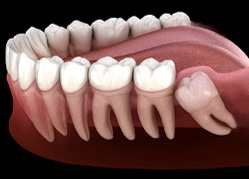
Wisdom teeth are the last teeth to erupt in the mouth. Technically they are called the 3rd molars, because they erupt behind the 2nd molars in the mouth. We have 4 wisdom teeth, two in the upper arch and two in the lower. The wisdom teeth are the ones least needed for good oral health. They may not erupt or emerge from your gums until your late teens or early twenties - if they erupt at all. Most often they are impacted or trapped in the jaw-bone and gums, usually because there is not enough room for them in your mouth. There are 4 possible ways in which wisdom teeth may cause problems:-
Types of Tooth Bonding ProceduresThere are two types of bonding. What type is indicated in your situation depends upon whether you have a small area or a larger area that requires correction.
The picture above shows an impacted wisdom tooth. The swollen gums are depicted in red, while the decayed portions are shown in black. It also shows the erupting wisdom tooth putting pressure on the adjacent tooth in front, which if allowed to continue for a longer time, could result in crowding. The position of the wisdom tooth also makes it difficult to keep that area clean, leading to decay and gum infection. Your dental evaluation will consist of oral examination and x-rays. Your dentist may also need to know your medical history, as extraction of an impacted tooth usually is a minor surgical procedure. But the surgery is a minor one and the patient is back to work in a day or two. The x-rays show the type of impaction and thus helps the dentist plan your treatment. Positions of Impaction:Due to unavailability of space in the jaws, the impacted wisdom teeth grow in many different directions, commonly at an angle. The complexity of surgery depends on the type of impaction, as explained below.
A wisdom tooth may grow at an angle towards your other teeth. This type of impaction is called as a Mesio-angular impaction.
A wisdom tooth which erupts at an angle away from your other teeth is said to be Disto-angularly impacted.
A wisdom tooth facing your other teeth horizontally is said to be Horizontally impacted.
A tooth which is in normal direction but still unable to erupt due to lack of space is said to be Vertically impacted. Once your wisdom teeth have been removed, you can take steps to keep your mouth healthy. Floss and brush daily to ward off tooth decay and gum disease, and make sure you get regular dental checkups. |
The process of aligning teeth is technically called Orthodontics. It may be loosely defined as the science of moving teeth, aligning irregular, crowded or spaced teeth. Dentists who have expertise in this field are called Orthodontists. Anyone with mal-aligned or irregular teeth, crowded, overlapping teeth, or with gaps in between may require orthodontic treatment. The Cause - There are many reasons for irregular teeth:
Why Teeth Sometimes Need to be ExtractedIn cases of severe crowding of teeth, there may not be any space available to align the teeth. Then it becomes necessary to extract some teeth to create enough space for the other teeth to get aligned correctly. Whether Spaces created by Extracting Teeth will get filledAs the teeth are moved for aligning them correctly, they move into the spaces created by the extraction. Hence the spaces created by extraction are completely filled once the teeth are aligned. Will Teeth Move Back to their Original Positions after TreatmentAbout 15-20% relapse is bound to occur over a period of time. Hence Orthodontists sometimes over-correct the alignment, anticipating the rebound. This can be minimized by following the instructions given to the patient during the maintenance phase of treatment. The TreatmentThis is commonly done by fixing braces to your teeth and using a thin guiding wire to straighten them out. The treatment does involve a certain amount of pain, which may be mild to moderate and lasts for upto a week after treatment begins. After that there is generally no pain. However, each time the wire is adjusted or changed, expect to have some pain. You will be required to eat soft food, food that is cut into small pieces, or well-cooked. Anything sticky or hard is best avoided during treatment. Brushing will require an extra effort on your part. You may use a soft brush twice a day in gentle circular motions, making sure to dislodge any accumulated food particles and plaque. Another area of concern is sports. Be careful to take care of your braces during any sporting activity to prevent damage to teeth and lips. Having undergone treatment, get ready to receive compliments on your new look! |
Overview: Often an alternative to crowns, veneers are very thin pieces of specially-shaped porcelain or plastic that are glued over the front of your teeth with little or no anesthesia needed. They are the cure for teeth that are severely discolored, chipped, have small holes or pits, misshapen or crooked, or for the correction of unwanted or uneven spaces. Unlike crowns, veneers won't require the dentist to remove much of the tooth itself in most cases. Veneers are created from an impression taken by your cosmetic dentist. Your custom veneer is then glued directly onto your tooth. Typically costing less than crowns, veneers won't stain, making veneers a very popular solution for many people seeking that perfect smile. Strong and very durable, veneers last from ten to fifteen years, and come in colors that will brighten dark teeth without the worry of them changing color. Who is a candidate for Dental Veneers? Veneers, porcelain or plastic, are placed over the front teeth to change color shape of the teeth. Veneers are ideal for teeth that are too small, too big, or have uneven surfaces. It is very common for people to have imperfect teeth, either oddly shaped teeth, chipped teeth, crooked teeth, teeth with small holes in them, or an inappropriate sized tooth or teeth that have an odd appearance. Veneers solve such irregularities and create a durable and pleasing smile. Types of Tooth Veneer Procedures There are two tooth veneers procedures available that correct discoloration of the teeth by removing the brown and yellow staining. While each work effectively, there are advantages and disadvantages to each procedure dependent upon your objectives and commitment to the processes. The type of procedures available should be discussed with your cosmetic dentist, and they will recommend the most appropriate tooth veneers procedure for you. Composite Veneer Procedure: Composite(direct) veneers are usually performed in a single visit. The procedure is an application of a bond and enamel directly to the tooth's surface. Porcelain Veneer Procedure: Porcelain (indirect) veneers are a very thin porcelain material. Usually porcelain veneers require two visits and also require a dental laboratory to create the final tooth restoration piece. Lumineer Porcelain Veneer Procedure: Made of Cerinate porcelain, Lumineers are a new type of porcelain veneers. They are contact lens-thin, roughly .2 mm thick. Little to no tooth reduction in most cases is necessary with this type of veneer and anesthetics or numbing shots are not needed. How are Tooth Veneers attached to your Tooth? Teeth are prepared for veneers by lightly buffing to allow for the small added thickness of the veneer. Veneers are thin like contact lenses, and will usually only need tooth reduction of 0.5mm to 1.0mm. A mold is taken of the teeth, from which the veneers are modeled after. Temporary veneers will be placed and worn until your permanent veneers are ready. Your dentist places the veneers with water or glycerin on the teeth to verify their perfect fit and the shade or color. The color cannot be changed after the veneers are adhered to your teeth. The tooth is then cleansed with chemicals to achieve a durable bond. Once the glue is between the veneer and your tooth, a light beam is used to harden the glue/cement. The procedure for Lumineers is different than the above traditional porcelain veneers. Still two visits, but there is little to no preparation of the tooth and no need for temporary veneers. |
Fillings can help save your teeth! Although some might dread the experience of a dentist repairing the decay caused by a cavity, fillings are a modern marvel. Without dental fillings, we would be left to live through the pain of a dieing tooth as well as the eventual extraction of that tooth. It is hard to find a person not shuddering at the thought of going to a dentist, particularly for cavity fillings. The sound of drill is no music anyway, more particularly to children. But not anymore! Thanks to the drill-less technology, the attractive tooth coloured fillings can be provided faster and easier than ever before.
New technology has created AIR ABRASION, an exciting devise that enables the teeth to be treated for decay often without the use of the dental hand piece. Most cavities that are detected early can be treated immediately, without a drill and without a needle. Abrasion is a gentle “drill-less” technology that can frequently be used in place of or in conjunction with the drill to make procedure more comfortable, often without the need for anesthetic. Air abrasion is perfect for children. Microabrasion is a method that can be used to remove the stain and surface discoloration from your teeth. It uses a pressurised stream of a non-toxic aluminium oxide powder to rapidly remove the surface marks. This method does not require a local anaesthetic. One of the conditions we see among children is discoloration. A number of conditions can cause discoloration of permanent teeth. For example, trauma to a baby tooth, an infection around a baby tooth, and high fevers or prolonged chronic illnesses during childhood can cause discolorations. Fluoride can also cause some white or brown discolorations of teeth when a child receives a high dose over a period of time. Microabrasion has proven very successful at removing many of these discolorations. In microabrasion, dentists carefully rub a compound on the teeth to remove superficial stains and discoloration. Some teeth have a deeper, irreversible stain or discoloration, the result of trauma, root canal therapy or medications such as tetracycline. These deep stains are not improved by microabrasion. It is best described as a mini sandblaster. The unit sprays a fine stream of tiny Aluminum Oxide, 27 to 50 microns in diameter particles that remove decay. The fine particles are mixed with compressed air and directed in a stream at the tooth, removing the decay. The dentist remains in control by adjusting the amount and pressure of the powder stream. The tooth is then restored with natural looking materials to strengthen and protect the remaining tooth structure. By removing as little tooth structure as possible, more of the healthy tooth structure remains. Air abrasion is best suited for small to medium cavities that will be filled with tooth colored restorations. Air Abrasion is not ideal for large cavities or removing silver-mercury fillings. Larger fillings and crown preparations are not good candidates for air abrasion. Air abrasion is perfect for cavities that are small or easily accessible. ![]()
|
|
Treating Gum Disease With Surgery
When unable to prevent gum disease, medical treatment is the only solution. In years past, gum surgery would involve several months of painful visits. The mouth bleeds readily; subsequently, gum surgery was performed exclusively in small sections of the mouth (quadrants). The patient would need time to heal, a follow-up appointment would be necessary for suture removal, and then more healing time was required before the next step was taken. This lengthy process has recently been replaced with the invention of laser periodontal therapy (LPT). This technology takes advantage of highly precise lasers. This process is called laser assisted new attachment procedure (LANAP). During laser gum surgery, the laser directs a small amount of energy -- about the thickness of three strands of hair -- between your gum and tooth. The laser removes the diseased tissue, eliminating the infection. All of this is done without making any type of incision. After removing the diseased tissue, the laser immediately cauterizes the wound. The result is that you experience little to no bleeding. An added benefit of the laser is its ability to seal nerve endings. The entire process results in only minor discomfort making local anesthesia unnecessary. The ease of laser gum surgery translates into a faster recovery. Traditional surgery requires a 2 to 4 week recovery time. With an LPT procedure, many people return to work within a day. Better Than Before
These lasers were created by dentists, receiving extensive clinical trials before receiving Federal Drug Administration approval. This is set to reinvent periodontal surgery as we know it. (The laser has been approved for a myriad of treatments that formerly would have required drills, bits, possibly a ratchet of some kind and maybe even some duct tape. Ouch.) Here are some more fabulous uses for the awe-inspiring LPT:
|
Cleft lip (cheiloschisis) and cleft palate (palatoschisis) (colloquially known as harelip), which can also occur together as cleft lip and palate, are variations of a type of clefting congenital deformity caused by abnormal facial development during gestation. A cleft is a fissure or opening—a gap. It is the non-fusion of the body's natural structures that form before birth. A cleft lip or palate can be successfully treated with surgery soon after birth. Cleft lips or palates occur in somewhere between one in 600-800 births. Cleft lip If the cleft does not affect the palate structure of the mouth it is referred to as cleft lip. Cleft lip is formed in the top of the lip as either a small gap or an indentation in the lip (partial or incomplete cleft) or it continues into the nose (complete cleft). Lip cleft can occur as a one sided (unilateral) or two sided (bilateral). It is due to the failure of fusion of the maxillary and medial nasal processes (formation of the primary palate). ![]() Unilateral incomplete![]() Unilateral incomplete![]() Unilateral incompleteA mild form of a cleft lip is a microform cleft. A microform cleft can appear as small as a little dent in the red part of the lip or look like a scar from the lip up to the nostril. In some cases muscle tissue in the lip underneath the scar is affected and might require reconstructive surgery. It is advised to have newborn infants with a microform cleft checked with a craniofacial team as soon as possible to determine the severity of the cleft. ![]() 3 month old boy before going into surgery to have his unilateral incomplete cleft lip repaired.![]() The same boy, 1 month after the surgery.![]() Again the same boy, 18 months old. Note how the scar gets less visible with age.![]() 6 month old girl before going into surgery to have her unilateral complete cleft lip repaired.![]() The same girl, 1 month after the surgery.![]() Again the same girl, age 5 years old. Note how the scar gets less visible with age.Cleft palate Cleft palate is a condition in which the two plates of the skull that form the hard palate (roof of the mouth) are not completely joined. The soft palate is in these cases cleft as well. In most cases, cleft lip is also present. Cleft palate occurs in about one in 700 live births worldwide.[2] Palate cleft can occur as complete (soft and hard palate, possibly including a gap in the jaw) or incomplete (a 'hole' in the roof of the mouth, usually as a cleft soft palate). When cleft palate occurs, the uvula is usually split. It occurs due to the failure of fusion of the lateral palatine processes, the nasal septum, and/or the median palatine processes (formation of the secondary palate). The hole in the roof of the mouth caused by a cleft connects the mouth directly to the nasal cavity. Note: the next images show the roof of the mouth. The top shows the nose, the lips are colored pink. For clarity the images depict a toothless infant. ![]() Incomplete cleft palate![]() Unilateral complete lip and palate.![]() Bilateral complete lip and palateA direct result of an open connection between the oral cavity and nasal cavity is velopharyngeal insufficiency (VPI). Because of the gap, air leaks into the nasal cavity resulting in a hypernasal voice resonance and nasal emissions.[3] Secondary effects of VPI include speech articulation errors (e.g., distortions, substitutions, and omis sind compensatory misarticulations (e.g., glottal stops and posterior nasal fricatives).[4]. Possible treatment options include speech therapy, prosthetics, augmentation of the posterior pharyngeal wall, lengthening of the palate, and surgical procedures.[3] Submucous cleft palate (SMCP) can also occur, which is an occult cleft of the soft palate with a classic clinical triad of bifid uvula, notching of the hard palate, and zona pellucida. Causes of cleft During the first six to eight weeks of pregnancy, the shape of the embryo's head is formed. Five primitive tissue lobes grow: a) one from the top of the head down towards the future upper lip; (Frontonasal Prominence) b-c) two from the cheeks, which meet the first lobe to form the upper lip; (Maxillar Prominence) d-e)and just below, two additional lobes grow from each side, which form the chin and lower lip; (Mandibular Prominence) If these tissues fail to meet, a gap appears where the tissues should have joined (fused). This may happen in any single joining site, or simultaneously in several or all of them. The resulting birth defect reflects the locations and severity of individual fusion failures (e.g., from a small lip or palate fissure up to a completely malformed face). The upper lip is formed earlier than the palate, from the first three lobes named a to c above. Formation of the palate is the last step in joining the five embryonic facial lobes, and involves the back portions of the lobes b and c. These back portions are called palatal shelves, which grow towards each other until they fuse in the middle.[6] This process is very vulnerable to multiple toxic substances, environmental pollutants, and nutritional imbalance. The biologic mechanisms of mutual recognition of the two cabinets, and the way they are glued together, are quite complex and obscure despite intensive scientific research.[7] Diagnosis Traditionally, the diagnosis is made at the time of birth by physical examination. Recent advances in prenatal diagnosis have allowed obstetricians to diagnose facial clefts in utero.[10] Treatment Cleft lip and palate is very treatable; however, the kind of treatment depends on the type and severity of the cleft. Cleft lip treatment Within the first 2–3 months after birth, surgery is performed to close the cleft lip. While surgery to repair a cleft lip can be performed soon after birth, the often preferred age is at approximately 10 weeks of age, following the "rule of 10s" coined by surgeons Wilhelmmesen and Musgrave in 1969 (the child is at least 10 weeks of age; weighs at least 10 pounds, and has at least 10g hemoglobin). If the cleft is bilateral and extensive, two surgeries may be required to close the cleft, one side first, and the second side a few weeks later. The most common procedure to repair a cleft lip is the Millard procedure pioneered by Ralph Millard. Dr. Ralph Millard performed the first procedure at a Mobile Army Surgical Hospital (MASH) unit in Korea .[11] Often an incomplete cleft lip requires the same surgery as complete cleft. This is done for two reasons. Firstly the group of muscles required to purse the lips run through the upper lip. In order to restore the complete group a full incision must be made. Secondly, to create a less obvious scar the surgeon tries to line up the scar with the natural lines in the upper lip (such as the edges of the philtrum) and tuck away stitches as far up the nose as possible. Incomplete cleft gives the surgeon more tissue to work with, creating a more supple and natural-looking upper lip. Pre-Surgical Devices for Cleft Lip Treatment In some cases of a severe bi-lateral complete cleft, the premaxillary segment will be protruded far outside the mouth. Nasoalveolar molding followed by surgery can reduce long-term nasal symmetry among patients with complete unilateral cleft lip-cleft palate patients compared to surgery alone, according to a retrospective cohort study.[12] Significant improvements in nasal symmetry were observed in the measurements of the projected length of the nasal ala, position of the superoinferior alar groove, position of the mediolateral nasal dome, and nasal bridge deviation. "The nasal ala projection length demonstrated an average ratio of 93.0 percent in the surgery-alone group and 96.5 percent in the nasoalveolar molding group" this study concluded. ![]() The blue lines indicate incisions.![]() Movement of the flaps; flap A is moved between B and C. C is rotated slightly while B is pushed down.![]() Pre-operation![]() Post-operation, the lip is swollen from surgery and will get a more natural look within a couple of weeks. See photos in the section above.Cleft palate treatment![]() A repaired cleft palate on a 64-year-old female. Often a cleft palate is temporarily closed, the cleft isn't closed, but it is covered by the obturator ( using a . The obturator is a prosthetic device made to fit the roof of the mouth covering the gap. Cleft palate can also be corrected by surgery, usually performed between 6 and 12 months. Approximately 20-25% only require one palatal surgery to achieve a competent velopharyngeal valve capable of producing normal, non-hypernasal speech. However, combinations of surgical methods and repeated surgeries are often necessary as the child grows. One of the new innovations of cleft lip and cleft palate repair is the Latham appliance. The Latham is surgically inserted by use of pins during the child's 4th or 5th month. After it is in place, the doctor, or parents, turn a screw daily to bring the cleft together to assist with future lip and/or palate repair. If the cleft extends into the maxillary alveolar ridge, the gap is usually corrected by filling the gap with bone tissue. The bone tissue can be acquired from the patients own chin, rib or hip. Complications A baby being fed using a customized bottle. The upright sitting position allows gravity to help the baby swallow the milk more easily Due to lack of suction, an infant with a cleft may have trouble feeding. An infant with a cleft palate will have greater success feeding in a more upright position. Gravity will help prevent milk from coming through the baby's nose if he/she has cleft palate. Gravity feeding can be accomplished by using specialized equipment, such as the Haberman Feeder, or by using a combination of nipples and bottle inserts like the one shown, is commonly used with other infants. A large hole, crosscut, or slit in the nipple, a protruding nipple and rhythmically squeezing the bottle insert can result in controllable flow to the infant without the stigma caused by specialized equipment.
ndividuals with cleft also face many middle ear infections which can eventually lead to total hearing loss. The Eustachian tubes and external ear canals may be angled or tortuous, leading to food or other contamination of a part of the body that is normally self cleaning. Speech is both receptive and expressive. We hear and understand spoken language (receptive) We learn to manipulate our mouth, tongue, oral cavity, to express ourselves (expressive). Hearing is related to learning to speak. Babies with palatal clefts may have compromised hearing and therefore, if the baby cannot hear, it cannot try to mimic the sounds of speech. Thus, even before expressive language acquisition, the baby with the cleft palate is at risk for receptive language acquisition. Because the lips and palate are both used in pronunciation, individuals with cleft usually need the aid of a speech therapist. Bonding with the infant, socializing with family and community may be interrupted by the unexpected appearance, unusual speech and the surgical interventions necessary. Support for the parents as well as for the child can be pivotal. |
|
Gingivitis Gingivitis ("inflammation of the gums") (gingiva) around the teeth is a general term for gingival diseases affecting the gingiva (gums).[1] As generally used, the term gingivitis refers to gingival inflammation induced by bacterial biofilms (also called plaque) adherent to tooth surfaces. Causes Gingivitis can be defined as inflammation of the gingival tissue without loss of tooth attachment (i.e.periodontal ligament). Gingivitis is an irritation of the gums. It is usually caused by bacterial plaque that accumulates in the small gaps between the gums and the teeth and by calculus (tartar) that forms on the teeth. These accumulations may be tiny, even microscopic, but the bacteria in them produce foreign chemicals and toxins that cause inflammation of the gums around the teeth. This inflammation can, over the years, cause deep pockets between the teeth and gums and loss of bone around teeth—an effect otherwise known as periodontitis. Since the bone in the jaws holds the teeth into the jaws, the loss of bone from periodontitis can cause teeth over the years to become loose and eventually to fall out or need to be extracted because of acute infection. Proper maintenance (varying from "regular cleanings" to periodontal maintenance or scaling and root planing) above and below the gum line, done professionally by a dental hygienist or dentist, disrupts this plaque biofilm and removes plaque retentive calculus (tartar) to help remove the etiology of inflammation. Once cleaned, plaque will begin to grow on the teeth within hours. However, it takes approximately 3 months for the pathogenic type of bacteria (typically gram negative anaerobes and spirochetes) to grow back into deep pockets and restart the inflammatory process. Calculus (tartar) may start to reform within 24 hours. Ideally, scientific studies show that all people with deep periodontal pockets (greater than 5 mm) should have the pockets between their teeth and gums cleaned by a dental hygienist or dentist every 3–4 months.People with a healthy periodontium (gingiva, alveolar bone and periodontal ligaments) or people with gingivitis may only require periodontal debridement every 6 months. If the inflammation in the gums becomes especially well-developed, it can invade the gums and allow tiny amounts of bacteria and bacterial toxins to enter the bloodstream. Periodontitis has also been linked to diabetes, arteriosclerosis, osteoporosis, pancreatic cancer and pre-term low birth weight babies.[citation needed] Sometimes, the inflammation of the gingiva can suddenly amplify, such as to cause a disease called Acute Necrotizing Ulcerative Gingitivitis (ANUG), otherwise known as "trench mouth." The etiology of ANUG is the overgrowth of a particular type of pathogenic bacteria (fusiform-spirochete variety) but risk factors such as stress, poor nutrition and a compromised immune system can exacerbate the infection. This results in the breath being extremely bad-smelling, and the gums feeling considerable pain and degeneration of the periodontium rapidly occurs. This can be successfully treated with a 1-week course of Metronidazole antibiotic, followed by a deep cleaning of the gums by a dental hygienist or dentist and reduction of risk factors such as stress. Symptoms The symptoms of gingivitis are as follows:[citation needed]
PreventionGingivitis can be prevented through regular oral hygiene that includes daily brushing and flossing. Mouthwash is optional, usually using a saline solution (water and salt) or chlorhexidine Complications
|
|
Neuromuscular dentistry is a medical paradigm in which TM Joints, masticatory muscles and central nervous system mechanisms follow generic physiologic and anatomic laws applicable to all musculoskeletal systems. It is a treatment modality of dentistry that objectively focuses on correcting misalignment of the jaw at the temporomandibular joint (TMJ). Neuromuscular dentistry acknowledges the multi-facted musculoskeletal occlusal signs and symptoms as they relate to postural problems involving the lower jaw and cervical region. Neuromuscular dentistry recognizes the need to solve the root of the misalignment problem(s) by understanding the relationships of the tissues which include the muscles, teeth, temporomandibular joints, and nerves. In short, neuromuscular dentistry and technology add objective data and understanding to previous mechanical models of occlusion.
Symptoms of temporomandibular joint disorder (TMD) are claimed to include:
Neuromuscular dentistry uses computerized instrumentation to measure the patient's jaw movements via Computerized Mandibular Scanning (CMS) or Jaw Motion Analysis (JMA), muscle activity via electromyography (EMG) and temporomandibular joint sounds via Electro-Sonography (ESG) or Joint Vibration Analysis (JVA) to assist in identifying joint derangements. Surface EMG's are used to verify pre-, mid- and post-treatment conditions before and after ultra-low frequency Transcutaneous Electrical Nerve Stimulator (TENS). Combining both computerized mandibular scanning (CMS) or jaw motion analysis (JMA) with ultra-low frequency TENS the dentist is able to locate a "physiological rest" position as a starting reference position to find jaw relationship between the upper to lower jaw along an isotonic path of closure up from physiologic rest position to establish a bite position. Electromyography can be used to confirm rested/homeostatic muscle activity of the jaw prior to taking a bite recording.[citation needed] Once a physiologic rest position is found, the doctor can determine the optimal positioning of the lower jaw to the upper jaw. An orthotic is commonly worn for 3-6 months (24 hours per day) to realign the jaw, at which point orthodontic treatment, use of the orthotic as a "orthopedical realigning appliance", overlay partial, or orthodontic treatment and/or rehabilitation of the teeth is recommended to correct teeth and jaw position. |
|
Cosmetic dentistry , is comprehensive oral care that combines art and science to optimally improve dental health, aesthetics and function.
Treatments Today's common cosmetic dental treatment options include:
|
If your tooth's nerve chamber becomes infected by decay, root canal treatment is often the only way to save your tooth. Inside your tooth's hard outer shell is a nourishing pulp of blood vessels, lymph vessels and nerves. The root's canal, allow these vessels and nerves to extend to the bone. Deep tooth decay, or injury can cause serious damage and infection to the pulps nerves and vessels. Root canal, also known as endodontic, treatment cleans out the infected pulp chamber and canals. Some indications of the need for root canal treatment may be:
Treatment Procedure
Step 1
Step 2
Step 3
Step 4
Step 5 |
Malocclusion(Bad Bite)In order to understand Malocclusion, let us first understand Occlusion. Occlusion refers to the alignment and spacing of the teeth and the way in which the upper and lower teeth fit together. Ideally, the upper teeth fit slightly over the lower teeth. Proper alignment of teeth prevents undue force from being placed on just a few teeth and keeps the lips, cheeks, and tongue away from the biting. Malocclusion literally means "poor closing" or "bad bite." Malocclusion is an abnormal alignment of the upper and lower jaws that prevents the teeth from meeting properly. If the teeth are maloccluded (out of alignment), undue strain is placed on some of the teeth, which may fracture portions of the crown or loosen the teeth. A bad bite (malocclusion) can be caused by several factors: Dental Malocclusion – class I Malocclusion
A dental malocclusion occurs when the teeth are not lined up properly as they are crooked, crowded and/or turned. In this your bite is otherwise fine due to the jaws being properly aligned, your top teeth line up with your bottom teeth.
Skeletal malocclusion Class III MalocclusionA skeletal malocclusion where your lower jaw protrudes. Your lower teeth stick out past your upper teeth. This is also called an "underbite".
Proper OcclusionA beautiful smile where all of your teeth are straight and your top teeth line up with your bottom teeth. CausesA common cause of malocclusion is disproportion between jaw size and tooth size or between the size of the upper and lower jaws. These differences can result in the overcrowding of teeth and in an abnormal bite. Another cause is loss of one or more teeth: When a tooth is lost, nearby teeth tend to drift into the newly available space, moving them out of alignment. If missing permanent teeth are not replaced with implants, a bridge, or a partial denture, the adjacent teeth can "tip" into the empty space and the opposing teeth can "super-erupt" meaning they grow longer than is natural. Malocclusion may have a hereditary component. Bad HabitsThe teeth are not as fixed in place as one might think! A strong, constant breeze can cause a tree to grow at an angle, instead of allowing straight and upright growth. The few bad habits or repetitive forces on your teeth can also cause them to become "out of alignment."
Grinding Teeth (Bruxism)Severe cases of grinding teeth (bruxism) can also change the occlusion. Most people who grind their teeth do so in their sleep and therefore may be quite unaware of the growing problem. The muscles that move the jaw are very powerful and can do major damage to the teeth when the biting surfaces don't fit together properly. This can lead to even more severe wear or it may crack off a cusp or split the tooth or create a microscopic chipping away close to the gum line to form a deep groove in the tooth. This is called an abfraction. Missing TeethAnother cause is loss of one or more teeth: When primary (baby) teeth that are prematurely lost due to decay or injury, nearby teeth tend to drift into the newly available space, moving them out of alignment. Less common causes of malocclusion include misalignment of a jaw fracture, tumors of the mouth or jaw, etc. and improper fitting of crowns, fillings, retainers, or braces. Correcting a malocclusionOf course, more than one of the above factors may be involved, so it is important to obtain a professional evaluation. Left untreated, a malocclusion not only affects the patient's appearance, it can also lead to TMJ problems and an increased risk of decay and gum disease. Occasionally, when an orthodontic appliance alone is not sufficient, jaw surgery may be necessary. Other methods of treating malocclusion include selective grinding of some teeth or building them up with the use of crowns or other dental restorations. The specialists on our panel will evaluate each individual case to determine the best course of action to prevent or cure the malocclusion. Visit our Orthodontics and Braces pages to learn more about how early detection of malocclusions in children and the use of arch expanders can reduce and sometimes eliminate the need for braces! |
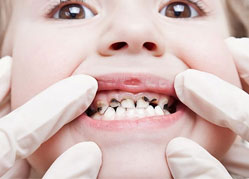
Dental caries , also known as tooth decay or cavity , is a disease where bacterial processes damage hard tooth structure (enamel, dentin and cementum).[1] These tissues progressively break down, producing dental cavities (holes in the teeth). Two groups of bacteria are responsible for initiating caries, Streptococcus mutans and Lactobacilli. If left untreated, the disease can lead to pain, tooth loss, infection, and, in severe cases, death.[2] Today, caries remains one of the most common diseases throughout the world. Cariology is the study of dental caries.
The presentation of caries is highly variable, however the risk factors and stages of development are similar. Initially, it may appear as a small chalky area which may eventually develop into a large cavitation. Sometimes caries may be directly visible, however other methods of detection such as radiographs are used for less visible areas of teeth and to judge the extent of destruction. Tooth decay is caused by specific types of acid-producing bacteria which cause damage in the presence of fermentable carbohydrates such as sucrose, fructose, and glucose.[3][4][5] The mineral content of teeth is sensitive to increases in acidity from the production of lactic acid. Specifically, a tooth (which is primarily mineral in content) is in a constant state of back-and-forth demineralization and remineralization between the tooth and surrounding saliva. When the pH at the surface of the tooth drops below 5.5, demineralization proceeds faster than remineralization (i.e. there is a net loss of mineral structure on the tooth's surface). This results in the ensuing decay. Depending on the extent of tooth destruction, various treatments can be used to restore teeth to proper form, function, and aesthetics, but there is no known method to regenerate large amounts of tooth structure. Instead, dental health organizations advocate preventive and prophylactic measures, such as regular oral hygiene and dietary modifications, to avoid dental caries.[6] Though more than 95% of trapped food is left packed between teeth after every meal or snack, over 80% of cavities develop inside pits and fissures in grooves on chewing surfaces where the brush cannot reach and there is no access for saliva and fluoride to neutralise acid and remineralise demineralised tooth. Few cavities occur where saliva has easy access. Chewing fibre like celery after eating helps force saliva into trapped food to dilute carbohydrate like sugar, neutralise acid and remineralise demineralised teeth.[citation needed] Rampant Caries
In some instances, caries are described in other ways that might indicate the cause. "Baby bottle caries", "early childhood caries", or "baby bottle tooth decay" is a pattern of decay found in young children with their deciduous (baby) teeth. The teeth most likely affected are the maxillary anterior teeth, but all teeth can be affected.[17] The name for this type of caries comes from the fact that the decay usually is a result of allowing children to fall asleep with sweetened liquids in their bottles or feeding children sweetened liquids multiple times during the day. Another pattern of decay is "rampant caries", which signifies advanced or severe decay on multiple surfaces of many teeth.[18] Rampant caries may be seen in individuals with xerostomia, poor oral hygiene, stimulant use (due to drug-induced dry mouth[19]), and/or large sugar intake. If rampant caries is a result of previous radiation to the head and neck, it may be described as radiation-induced caries. Problems can also be caused by the self destruction of roots and whole tooth resorption when new teeth erupt or later from unknown causes. Affected Hard Tissue Depending on which hard tissues are affected, it is possible to describe caries as involving enamel, dentin, or cementum. Early in its development, caries may affect only enamel. Once the extent of decay reaches the deeper layer of dentin, "dentinal caries" is used. Since cementum is the hard tissue that covers the roots of teeth, it is not often affected by decay unless the roots of teeth are exposed to the mouth. Although the term "cementum caries" may be used to describe the decay on roots of teeth, very rarely does caries affect the cementum alone. Roots have a very thin layer of cementum over a large layer of dentin, and thus most caries affecting cementum also affects dentin. Signs and symptoms A person experiencing caries may not be aware of the disease.[20] The earliest sign of a new carious lesion is the appearance of a chalky white spot on the surface of the tooth, indicating an area of demineralization of enamel. This is referred to as incipient decay. As the lesion continues to demineralize, it can turn brown but will eventually turn into a cavitation ("cavity"). Before the cavity forms, the process is reversible, but once a cavity forms, the lost tooth structure cannot be regenerated. A lesion which appears brown and shiny suggests dental caries was once present but the demineralization process has stopped, leaving a stain. A brown spot which is dull in appearance is probably a sign of active caries. As the enamel and dentin are destroyed, the cavity becomes more noticeable. The affected areas of the tooth change color and become soft to the touch. Once the decay passes through enamel, the dentinal tubules, which have passages to the nerve of the tooth, become exposed and cause the tooth to hurt. The pain may worsen with exposure to heat, cold, or sweet foods and drinks.[1] Dental caries can also cause bad breath and foul tastes.[21] In highly progressed cases, infection can spread from the tooth to the surrounding soft tissues. Complications such as cavernous sinus thrombosis and Ludwig's angina can be life-threatening.[22][23][24] Causes There are four main criteria required for caries formation: a tooth surface (enamel or dentin); caries-causing bacteria; fermentable carbohydrates (such as sucrose); and time.[25] The caries process does not have an inevitable outcome, and different individuals will be susceptible to different degrees depending on the shape of their teeth, oral hygiene habits, and the buffering capacity of their saliva. Dental caries can occur on any surface of a tooth which is exposed to the oral cavity, but not the structures which are retained within the bone.[26] Other Risk Factors Reduced saliva is associated with increased caries since the buffering capability of saliva is not present to counterbalance the acidic environment created by certain foods. As a result, medical conditions that reduce the amount of saliva produced by salivary glands, particularly the submandibular gland and parotid gland, are likely to lead to widespread tooth decay. Examples include Sjögren's syndrome, diabetes mellitus, diabetes insipidus, and sarcoidosis.[36] Medications, such as antihistamines and antidepressants, can also impair salivary flow.[37] Moreover, sixty-three percent of the most commonly prescribed medications in the United States list dry mouth as a known side effect.[36] Radiation therapy of the head and neck may also damage the cells in salivary glands, increasing the likelihood of caries formation.[38] The use of tobacco may also increase the risk for caries formation. Some brands of smokeless tobacco contain high sugar content, increasing susceptibility to caries.[39] Tobacco use is a significant risk factor for periodontal disease, which can cause the gingiva to recede.[40] As the gingiva loses attachment to the teeth, the root surface becomes more visible in the mouth. If this occurs, root caries is a concern since the cementum covering the roots of teeth is more easily demineralized by acids than enamel.[16] Currently, there is not enough evidence to support a causal relationship between smoking and coronal caries, but evidence does suggest a relationship between smoking and root-surface caries.[41]
TreatmentAn amalgam used as a restorative material in a tooth.
Destroyed tooth structure does not fully regenerate, although remineralization of very small carious lesions may occur if dental hygiene is kept at optimal level.[1] For the small lesions, topical fluoride is sometimes used to encourage remineralization. For larger lesions, the progression of dental caries can be stopped by treatment. The goal of treatment is to preserve tooth structures and prevent further destruction of the tooth. A tooth with extensive caries eventually requiring extraction.
PreventionToothbrushes are commonly used to clean teeth. Oral hygienePersonal hygiene care consists of proper brushing and flossing daily.[6] The purpose of oral hygiene is to minimize any etiologic agents of disease in the mouth. The primary focus of brushing and flossing is to remove and prevent the formation of plaque. Plaque consists mostly of bacteria.[62] As the amount of bacterial plaque increases, the tooth is more vulnerable to dental caries when carbohydrates in the food are left on teeth after every meal or snack. A toothbrush can be used to remove plaque on accessible surfaces, but not between teeth or inside pits and fissures on chewing surfaces. When used correctly, dental floss removes plaque from areas which could otherwise develop proximal caries. Other adjunct hygiene aids include interdental brushes, water picks, and mouthwashes. Dietary modificationFor dental health, frequency of sugar intake is more important than the amount of sugar consumed.[33] In the presence of sugar and other carbohydrates, bacteria in the mouth produce acids which can demineralize enamel, dentin, and cementum. The more frequently teeth are exposed to this environment, the more likely dental caries are to occur. Therefore, minimizing snacking is recommended, since snacking creates a continual supply of nutrition for acid-creating bacteria in the mouth. Also, chewy and sticky foods (such as dried fruit or candy) tend to adhere to teeth longer, and consequently are best eaten as part of a meal. Brushing the teeth after meals is recommended. |
|
The Mouth and Throat This is about cancers that occur in the mouth (oral cavity) and the part of the throat at the back of the mouth (oropharynx). The oral cavity and oropharynx have many parts:
This picture shows the parts of the mouth and throat.
This picture shows the area under the tongue. Oral cancer is part of a group of cancers called head and neck cancers. Oral cancer can develop in any part of the oral cavity or oropharynx. Most oral cancers begin in the tongue and in the floor of the mouth. Almost all oral cancers begin in the flat cells (squamous cells) that cover the surfaces of the mouth, tongue, and lips. These cancers are called squamous cell carcinomas. When oral cancer spreads (metastasizes), it usually travels through the lymphatic system. Cancer cells that enter the lymphatic system are carried along by lymph, a clear, watery fluid. The cancer cells often appear first in nearby lymph nodes in the neck. Cancer cells can also spread to other parts of the neck, the lungs, and other parts of the body. When this happens, the new tumor has the same kind of abnormal cells as the primary tumor. Oral Cancer: Who's at Risk?Doctors cannot always explain why one person develops oral cancer and another does not. However, we do know that this disease is not contagious. You cannot "catch" oral cancer from another person. The following are risk factors for oral cancer:
|
Overview
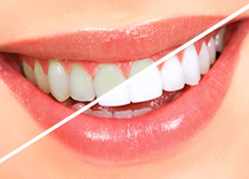
Everybody loves a bright white smile, and there are a variety of products and procedures available to help you improve the look of yours. Many people are satisfied with the sparkle they get from brushing twice daily with a fluoride-containing toothpaste, cleaning between their teeth once a day and the regular cleanings at your dentist’s office. If you decide you would like to go beyond this to make your smile look brighter, you should investigate all of your options. You can take several approaches to whiten your smile:
How teeth whitening bleach works?Teeth whitening bleach contains peroxide. Dentists use bleach that contains higher levels of peroxide to make your teeth whiter. In office bleaching done by a dentist on your teeth, at the most will take 2-3 hours. If you are undergoing laser teeth whitening bleach procedure, this is even more effective for lightening the stain in your teeth. Teeth whitening bleach designed to be used at home, requires the person to wear trays filled with the bleaching agent. The individual may be required to wear the tray for a considerable length of time. The entire process can turn out to be very messy and time consuming as well. In office whitening procedure is the best bet for anyone who wants to have shining white teeth. Bleaching
What is Tooth Whitening?Tooth Whitening is actually a mild bleaching process that restores stained or discolored teeth to a healthy, natural color. Don't be misled by unproven and ineffective over-the-counter whitening solutions. Our office uses an advanced procedure that is only available from your dentist.
What Causes Tooth Discoloration?Teeth become discolored for different reasons:
Is Bleaching Safe?Bleaching is very safe. We use a product that has been proven safe when used under the direction of a dentist. What Is The At-Home Bleaching Process?
First, we will make impressions of your teeth so that our lab can create custom bleaching trays to fit your mouth. These trays will guide the bleaching agent to the areas of your teeth that need to be bleached. We will record the current color of your teeth to help you monitor your progress.
Next, we will fit your custom trays in your mouth to ensure they feel comfortable. We will instruct you on how to apply the bleaching agent to your trays and how to insert them into your mouth. You will take the custom trays and bleaching agent home with you. Most patients wear the bleaching trays at night while they sleep, but they may be worn during the day since the clear, custom-fitted trays are barely visible and do not interfere with your ability to speak. When Will I See Results?
Immediately! Most patients see results after the first night. It will typically take from 2 to 6 weeks to restore your teeth to a beautiful white. The time it will take depends on the original color of your teeth, how discolored they were, and how frequently the treatment is applied. How Long Will The Results Last?The effects typically last several years. Many patients choose to "touch-up" their teeth every 6 to 12 months by applying the treatment for 1 or 2 nights. "Touch-ups" are especially useful for patients that drink beverages that stain teeth, like coffee, tea, and colas. Are There Any Side-Effects?Some patients may experience heightened tooth sensitivity to cold, or mild tooth or gum sensitivity during treatment, but these symptoms are only temporary and disappear within a few days. |


Malocclusion(Bad Bite)
Overview